
Meditation in and of itself can take on many different forms. As I mentioned in previous posts, you may already be meditating and not even realize it. Here I would like to give several examples of different types of Meditation so that people can further their own study into it.
“Thinking is fracturing the mind, meditation is rebuilding”.
– Elizabeth Pantazis, Yoga Teacher, Toronto, Canada
Yoga
Yoga is one of the great challengers as far as “can I meditate while doing something challenging”.
Within the practice, holding postures such as chair (imagine miming that you are seated in a chair with your legs trembling, muscles burning, shoulders working and sweat bursting from your pores) and trying to stay very, very calm. The ability to pull one’s mind from all of the physical feelings that were listed in parenthesis and into the breath, calming and soothing the mind is a lofty challenge, especially if you are just starting out in the practice. I often humourously state in my classes to “think happy thoughts” , which usually gets a few laughs and, as intended, breaks the serious and frustrated mind into something lighter.
In the case of Yoga, meditation is about existing in the moment. Finding and centering yourself as you calmly face a challenge head on and learn how to control life’s stressful situations through practice. Honestly, when I feel my legs burning and shaking or if I am trying to hold my balance without crashing to the floor and also trying to be calm , I’m not cluttering my mind with unnecessary thoughts.
Slow Movement
Slow moment exercises such as Qigong and Tai Chi are incredibly meditative. While most people are familiar with the slow and graceful movements of Tai Chi, few non-practitioners understand the meditation concept of the exercise. When one steps, the foot is placed in a very conscious and practiced manner, allowing the practitioner to flow from one location to another without losing balance. To do this, the mind (like Yoga) has to be fully conscious of the moment as it happens. Even a minor distraction could turn a graceful movement into an uncoordinated mess.
Qigong (Chi Gong), on the other hand, utilizes flowing movements while staying primarily in one place and in the grand hierarchy of things, is a parent to Tai Chi. During the slow and flowing movements that are timed to the breath, one can feel that their body is both heavy and light at the same time and that movement itself can become easier as the exercise progresses though the legs tend to get a very “heavily rooted to the ground” feeling. This type of meditative exercise is used to bring the user into a greater sense of balance and harmony with their body, mind and emotions. The slow pace while on the feet and the repetitive movements of the arms assist in strength and coordination building.
Guided Meditation
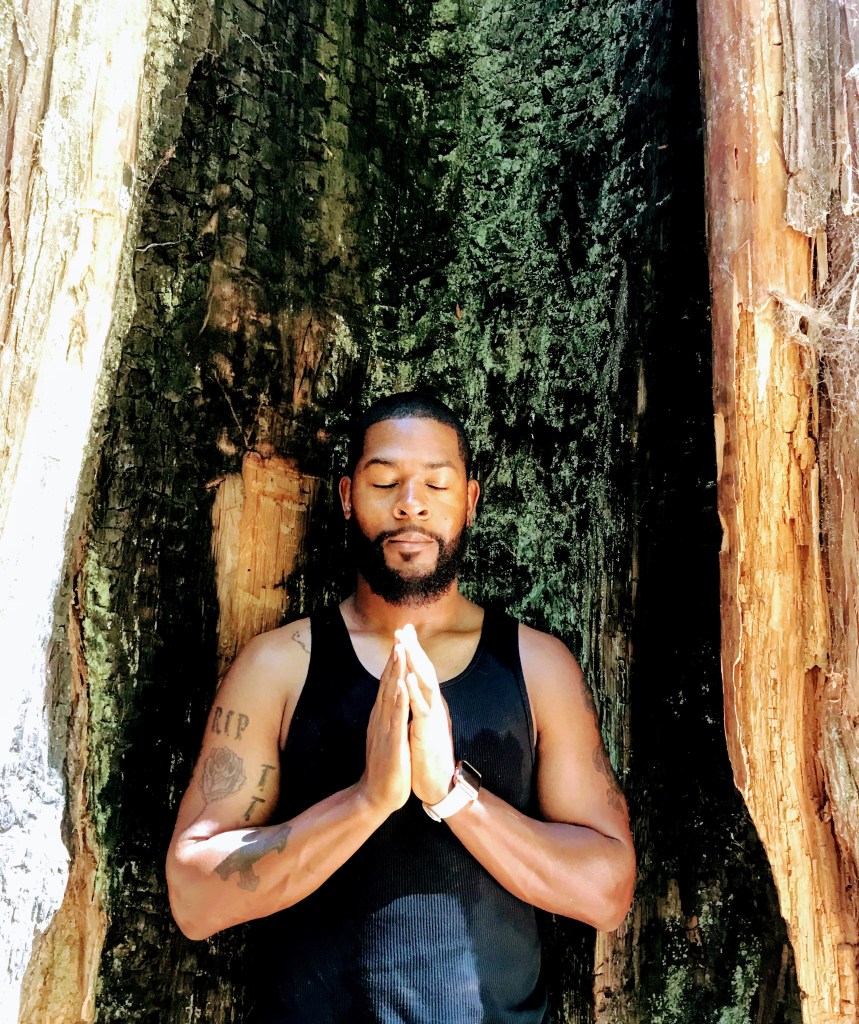
Guided Meditation is often confused with forms of hypnosis. True hypnosis doesn’t remove the user’s ability to remain in control. In fact, it’s a lot like daydreaming a sort of story that is gently narrated for you. This form of meditation is easily sought out online, such as through YouTube and music stores. These guided meditations can be for general relaxation or for a specific purpose, such as dealing with fear, anger or nearly anything you feel it might aid you in dealing with.
When people listen to these live or recorded meditations it can happen that the mind wanders off of the subject matter. I like to think of this as “free-flowing” within the currently relaxed state of mind. In other words, we are back to that “organizing of thoughts” I mentioned earlier, while in a daydreaming – like state.
Sometimes the free flowing takes on very abstract imagery, where strangely put together faces, objects and images may appear randomly. When you gaze upon abstract art, you try to find the hidden meaning within the shapes and lines that appear on the canvas. What do they mean? What is it that the artist is trying to convey?
The same is true within your unconscious mind. Wouldn’t it be wonderful if your unconscious mind could just tell you the facts straight up? Of course it would, but unfortunately that isn’t the case. Within the realm of the abstract within your own mind, you need to decipher what its meaning is. It is only for you and can only be sought out and answered by you. Like a map, in can lead you to interesting places.
If you don’t free flow in your meditations then just go with it, follow the guiding words and it will work fine for you. If you do happen to free flow consider these thoughts and images as more relevant than the spoken (guided) meditation.
Non-Guided Meditation
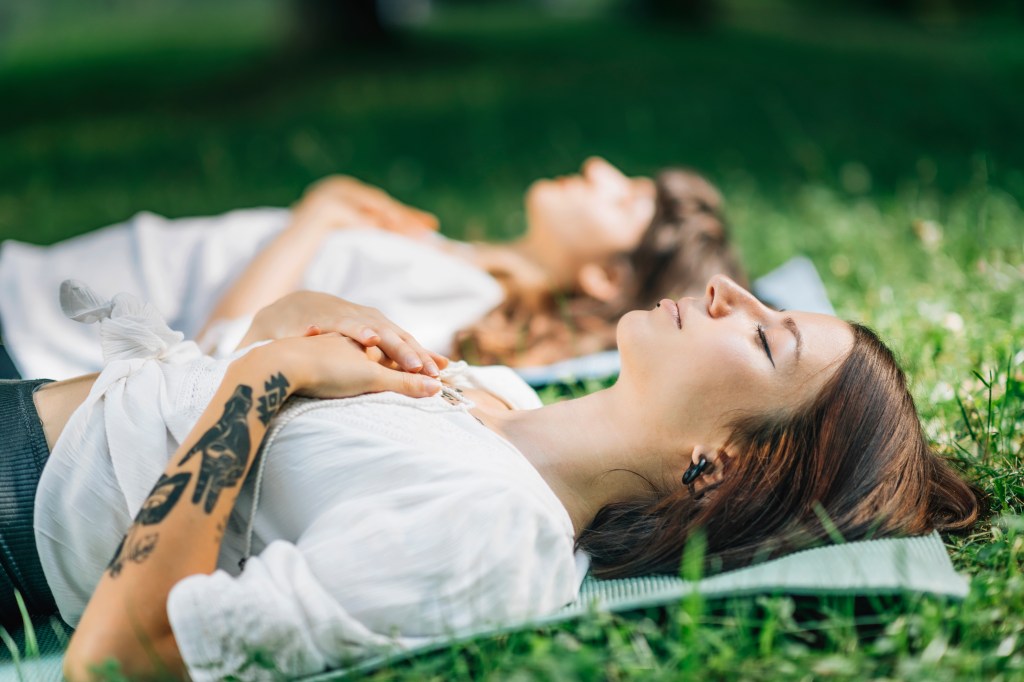
This form of meditation is often just sitting or lying down and listening to calm music or nature sounds. Perhaps watching a nature video or one containing fractal images of light. This can be incredibly relaxing to people though it can be at times more difficult than guided meditation in that the user can get easily distracted by sounds, time and tasks that need doing.
Wandering Mind Meditation
The wandering mind is one I mentioned in previous posts. The wandering mind will happen when one is, for example, a passenger in a vehicle (car, bus, train..) staring perhaps out the window but not really seeing anything because the mind is going elsewhere. The person washing dishes: wandering mind. The person vacuuming: wandering mind. Another interesting one I have observed in myself is that I’m reading a book and my mind wanders. I continue through the words, aware I’m reading, but when I snap out of my thoughts, I don’t remember anything I read. That will usually be a paragraph or two or sometimes a page.
The wandering mind meditation reveals to us that most of us meditate without even realizing that we’re doing it. There are a lot of people that think they cannot meditate, when in fact they do meditate.
Object/Deity Meditation
Here Meditating is often purpose driven. Perhaps while gazing at a Deity, God, or representation of such (cross, book, religious words, etc.) one will find their inner peace. Perhaps it is a prayer or wish. Sometimes people will focus on these items and all of the things that they feel scare, threaten, anger or any other negativity can be assisted while in the mere presence of these. The mind may wander to wishes unfulfilled, wish well being on others, peace or anything positive that these can trigger. For many, this is a powerful form of meditation, which can get them more deeply in touch with themselves and their form of religion.
Others may just utilize staring at a tree in nature. Watching passing clouds go by or calmly admiring the sun rising or setting. An interesting meditation I came across years ago was one that could apparently strengthen ones ability to meditate or concentrate and that is to lie back and watch the clouds (best done with broken clouds) going by. As they slowly pass overhead, try to dissolve them, as if you could actually do that. I’ve tried it with many interesting results (perhaps a future post).
Breathing Meditation
In Yoga, the art of Yogic Breathing is typically referred to under its originating name Pranayama. It utilizes different ways of breathing (abdominal, ribs and chest) as well as both mouth and nasal breathing at varying paces in order to achieve greater health, based on that breathing done in this way can contribute to one’s overall exercise and can allow the user to calm the body’s nerves.
Slow breathing, in particular does this. Slow breathing can aid in bringing you into a meditative state by creating a “sedative effect” on your nerves. Slow breathing is fairly easy to do: you do it every night when it’s time to fall asleep
Meditation is good for everyone but not everyone is going to be good at every kind of meditation. This list may give you a few avenues to begin your exploration of ways that may work best for you. Just remember, meditation, like anything else, requires practice in order to get better at it. Give things a good, honest try before you decide meditation is not for you. Practice as little or as often as you like.
 World Tree Yoga and Qigong Online